Reaction kettle
2019/2/25

Detailed introduction
I. Overview of Reactors
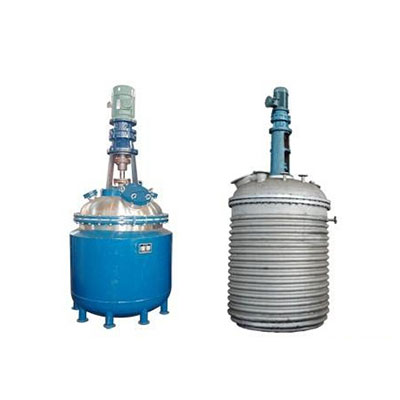
Reactor is a vessel that completes physical or chemical reaction process. It realizes the requirements of temperature, pressure, rotational speed, liquid level and so on by designing the structure and configuration of the reactor. The reactor has the functions of heating, cooling, dispersing, shearing and mixing at low and high speed. Reactors are widely used in petroleum, chemical industry, rubber, pesticides, dyestuffs, medicine and food. They are used to complete sulfurization, nitration, hydrogenation, alkylation, polymerization, condensation and other process. Therefore, reactor is also called reactor, reaction pot, decomposition pot, polymerization kettle, condensation kettle, distillation kettle and so on. They are used in different reaction processes. They are called different methods. Common saying is generally called reaction kettle. The reactor is a comprehensive reactor vessel. The structure, function and accessories of the reactor are designed according to the reaction conditions. Reactor can be realized. From the beginning, feeding-reaction-discharging can complete the pre-set reaction steps with a high degree of automation. The important parameters such as temperature, pressure, mechanical control (agitation, blast, etc.) and reactant/product concentration in the reaction process can be strictly controlled. The structure of reaction kettle is generally composed of kettle body, transmission device, mixing device, heating device, cooling device, sealing device and cleaning device. Corresponding auxiliary equipment: fractionating column, condenser, water separator, collecting tank, filter and so on.
II. Main Uses of Reactors
It is widely used in petroleum, chemical industry, rubber, pesticide, dyestuff, medicine and food. It is used as pressure vessel for sulfurization, nitration, hydrogenation, alkylation, polymerization and condensation.
Classification of Reactor Materials
Reactor materials are generally carbon-manganese steel, stainless steel, zirconium, nickel-based (Harrington, Monel) alloys and other composite materials. The reactor produced by our company is mainly made of stainless steel materials such as SUS304 and SUS316L. The agitator has anchor type, frame type, propeller type, turbine type, scraper type, combined type. The rotating mechanism can adopt cycloidal pinwheel reducer, stepless speed reducer or variable frequency speed regulation, etc. It can meet the special reaction requirements of various materials. Sealing device can adopt mechanical seal, packing seal and other sealing structures. Heating and cooling can adopt jacket, half pipe, coil, Miller plate and other structures. Heating methods include steam, electric heating, heat conducting oil, to meet the technological needs of acid, high temperature, wear resistance, corrosion resistance and other different working environments. It can also be designed and manufactured according to user's technological requirements.
1. Carbon steel reactor
Scope of application: environments free of corrosive liquids, such as certain oil processing.
2. Stainless steel reactor
Heating structure type electric heating type, jacket type, outer half pipe type, inner coil type, volume is 0.01m3-45m32, material carbon steel, stainless steel, high temperature resistant stainless steel, strong acid and alkali resistant stainless steel, enamel or PP material, etc.
Mixing type inclined slurry, anchor type, frame type, push type and single (double) spiral type, and other types of blades can be designed and manufactured according to customer requirements.
Scope of application: It is suitable for high-temperature and high-pressure chemical reaction test in petroleum, chemical industry, medicine, metallurgy, scientific research, universities and other departments. It is used to complete hydrolysis, neutralization, crystallization, distillation, evaporation, storage, hydrogenation, alkylation, polymerization, condensation, heating mixing, isothermal reaction and other processes. It can achieve high stirring effect for viscous and granular materials.
Applicable scope of glass-lined reactor: It is widely used in petroleum, chemical industry, food, medicine, pesticide, scientific research and other industries.
The scope of application of steel lined PE reactor: acid, alkali, salt and most alcohols. It is suitable for the extraction of liquid food and medicines. It is an ideal substitute for glue lining, fiberglass reinforced plastics, stainless steel, titanium steel, enamel and plastic welded plate.
Applicable scope of steel lined ETFE reactor: It has excellent anticorrosion performance and can resist various concentrations of acid, alkali, salt, strong oxidant, organic compounds and all other strong corrosive chemical media.
According to the working internal pressure, it can be divided into atmospheric pressure reactor, positive pressure reactor and auxiliary pressure reactor.
According to the mixing form, it can be divided into blade type, anchor type, frame type, screw belt type, turbine type, dispersed disc type, combined type and so on.
According to the heat transfer structure, it can be divided into jacket type, outer half pipe type, inner coil type and combination type.
3. Enamel Reactor (Enamel Reactor)
Scope of application: Widely used in petroleum, chemical, food, medicine, pesticides, scientific research and other industries.
4. Steel-lined reactor.
Scope of application: Suitable for acid, alkali, salt and most alcohols. It is suitable for the extraction of liquid food and medicines. It is an ideal substitute for glue lining, fiberglass reinforced plastics, stainless steel, titanium steel, enamel and plastic welded plate.
IV. Functional Classification of Reactors
1. According to heating/cooling mode, it can be divided into electric heating, hot water heating, heat conducting oil circulating heating, far infrared heating, outer (inner) coil heating, jacket cooling and inner coil cooling. The choice of heating mode is mainly related to the heating/cooling temperature required for chemical reaction and the heat required.
2. According to the material of the kettle body, it can be divided into carbon steel reactor, stainless steel reactor, glass-enameled reactor (enamel reactor) and plastic-lined reactor. Our company mainly produces carbon steel reactor, stainless steel reactor. Carbon steel reactor is suitable for environments without corrosive liquids and environments with low hygienic requirements, such as lubricating oil/grease processing. Stainless steel reactor is suitable for high temperature and high pressure chemical reaction test in petroleum, chemical industry, medicine, metallurgy, scientific research, universities and other departments. It is used to complete hydrolysis, neutralization, crystallization, distillation, evaporation, storage, hydrogenation, alkylation, polymerization, condensation, heating mixing, isothermal reaction and other processes. It can achieve high stirring effect for viscous and granular materials. At present, stainless steel reactor is mostly used in the industry.
3. According to the different process, the reactor can be divided into reaction kettle, dissolution kettle, distillation kettle, polymerization kettle and hydrogenation kettle.
- Related information

Anhui Xiangpai Machinery Manufacturing Co., Ltd. Copyright Anhui ICP Prepared 16011478-2 Disclaimer