Chinese medicine extraction tank
2019/2/25

Detailed introduction
I. Overview of Traditional Chinese Medicine Extraction Tanks
The chemical constituents of traditional Chinese medicine are very complex, including many effective ingredients, ineffective ingredients and toxic ingredients. It is an important content in the field of traditional Chinese medicine to extract its effective components, further isolate and purify them, and obtain effective monomers. Traditional Chinese medicine extraction tank is to use some technology to extract the effective ingredients of traditional Chinese medicine to the maximum extent, so as to improve the internal quality of traditional Chinese medicine preparations and clinical therapeutic effect, so that the effect of traditional Chinese medicine can be maximized.
The extraction methods include water decoction, impregnation, percolation, improved gelatin, reflux, solvent extraction, steam distillation and sublimation. Water decoction is the most commonly used method. According to the solubility of various active ingredients in Chinese herbal medicine, the extraction tank of Chinese herbal medicine is a method of dissolving the required active ingredients from the tissues of Chinese herbal medicine by choosing a solvent with high solubility for the required ingredients and low solubility for other ingredients. The commonly used extractants are water, organic solvents and so on. Water is a strong polar solvent. Hydrophilic components in Chinese herbal medicine, such as inorganic salts, sugars, polysaccharides with small molecules, tannins, amino acids, proteins, organic salts, alkaloids and glycosides, can be dissolved in water. In order to increase the solubility of some components, acid water and alkali water are often used as extracting solvents. Acid water extraction can make alkaloids and acids form salts and dissolve. Alkali water extraction can dissolve organic acids, flavonoids, anthraquinones, lactones, coumarins and phenols. However, it is easy to hydrolyze glycosides with water, and easy to mildew and deteriorate. The water extracts of some Chinese herbal medicines containing pectin and mucilage are often difficult to filter. In boiling water extraction, starch in Chinese herbal medicines can be gelatinized, which increases the difficulty of filtration. Therefore, Chinese herbal medicine with high starch content should not be ground into fine powder and decocted with water.
Traditional Chinese medicine decoctions are often decocted by direct fire. Warming up can increase the solubility of traditional Chinese medicine components. In addition, there may be "solubilization" phenomenon with other components, which increases the solubility of some components with low solubility and strong lipophilicity in water. However, the solubility of most lipophilic components in boiling water is not large, even if there is solubilization phenomenon, it is not easy to extract completely. If a large amount of water is used to decoct, it will increase the difficulty of evaporation and concentration, and will dissolve a large number of impurities, which will cause trouble for further separation and purification.
The extract of Chinese herbal medicine contains saponin and mucoid substance. When it is decompressed and concentrated, a large amount of foam will be generated, resulting in difficulty in concentrating. It is usually overcome by installing a vapor-liquid separation anti-splash ball on the distiller, while the film concentrator is commonly used in industry. Hydrophilic organic solvents: that is to say, water-soluble organic solvents, such as ethanol (alcohol), methanol (xylin), acetone, etc., ethanol is the most commonly used. Ethanol has better solubility and penetration ability to Chinese herbal medicine cells. Hydrophilic components, except protein, mucus, pectin, starch and some polysaccharides, can mostly be dissolved in ethanol. The insoluble lipophilic components in water also have higher solubility in ethanol. It can also be extracted by different concentration of ethanol according to the nature of the extracted substance. Ethanol extraction is less than water consumption, shorter extraction time and less soluble impurities. Ethanol is an organic solvent, although flammable, it has low toxicity, low price and convenient source. It can be recycled and reused with certain equipment, and the extract of ethanol is not easy to mildew and deteriorate. For these reasons, ethanol extraction has always been one of the most commonly used methods. Therefore, water extraction and ethanol extraction are the most commonly used extractors of traditional Chinese medicine.
II. Basic Configuration of Chinese Medicine Extraction Tank
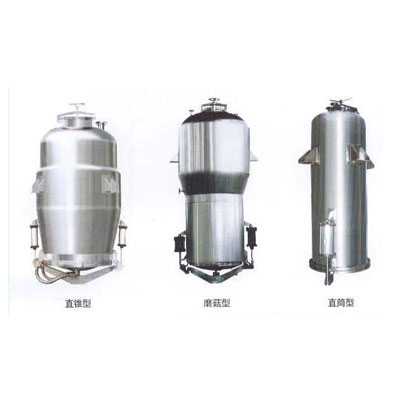
The extraction tank body is equipped with liquid inlet, circulation outlet, evaporation outlet, reflux outlet, cleaning outlet, SIP outlet, steam inlet, condensate outlet, feed outlet, slag discharge door, cylinder, cylinder control panel, etc. The size of the inlet can also be specified according to the pipe interface configuration of the feed pump. Circulating outlet is to extract fully, using circulating pump for forced circulation, which can not only extract adequately, but also effectively prevent logistics blocking in the filter network, which can form a flow to ensure the complete drainage. The evaporation port is used for evaporation of the leaching solution, and the general evaporator is equipped with a foam trap to prevent foam overflow. The tank is equipped with CIP on-line cleaning system, 360 degrees without dead angle and omni-directional rotation, sanitary without dead angle, which meets the GMP standard. The size of the feeding inlet is generally 350,400 or 500 mm, depending on the size of the tank, the size can also be specified. The design of slag discharge door adopts cylinder opening and closing. The cylinder can be lifted and rotated. It has self-locking function and is safe and convenient.
3. Description of parameter selection of extraction tank
1. The volume of extraction tank can be customized without standard. The small size is 50L-500L, the large size is 1000L, 2000L, 3000L, 4000L, 6000L and so on.
2. Stainless steel is generally used in the material of extraction tank, SUS 304 and SUS 316L are commonly used. Material selection is based on logistics characteristics, non-corrosive SUS 304. SUS316L can be used for slight corrosion.
3. With regard to the wall thickness of the extraction tank, it is generally necessary to provide the service temperature and pressure in the tank, and the service pressure and temperature of the jacket. We will calculate the wall thickness according to the pressure. Common wall thickness varies from 3 to 12 mm.
4. The tank configuration can be selected or specified, such as the number and size of the nozzle. Inlet, circulating, evaporating, reflux, cleaning, SIP, steam inlet, condensate outlet, feed port, slag discharging door, cylinder, cylinder control panel, etc. can be selected or fully configured by us.
5. Matching accessories, such as foam trap, condenser, double filter, oil-water separator, can be supplied by us in a complete set or optionally.
6. Other optional "liquid level control, pressure control and temperature control can be configured as required. It can not only display in situ, but also be controlled and displayed remotely. Remote control can collect extraction temperature, working time, vacuum degree, stirring speed, stirring type, high and low liquid level.
7. Most of the traditional Chinese medicine extraction tanks are static extraction tanks. According to the different characteristics of materials, mixing systems can be configured to form dynamic extraction tanks.
For more information on parameters, configuration and instructions, please call.
Anhui Xiangpai Machinery Manufacturing Co., Ltd. Copyright Anhui ICP Prepared 16011478-2 Disclaimer