Beer Fermentation Tank
2019/2/26

Brief Introduction of Beer Fermentation
Beer fermentation is a normal life activity of beer yeast, which utilizes fermentable substances in wort under certain conditions. The metabolic product of beer yeast is the desired product - beer. Because of the different types of yeast, the fermentation conditions, product requirements and flavor are different, and the fermentation methods are also different. Beer can be divided into upper fermented beer and lower fermented beer according to the type of yeast fermentation. Generally, beer fermentation technology can be divided into traditional fermentation technology and modern fermentation technology. Modern fermentation mainly includes cylindrical open-air conical fermentation tank fermentation, continuous fermentation and high concentration dilution fermentation, etc. At present, cylindrical open-air conical fermentation tank fermentation is mainly used.
Beer Fermentation Technology
Production process: oxygenated cold wort fermentation pre-fermentation
Interpretation: Fermentable Substances in Wort Life Activities
Beer: Metabolic products are what you want
Catalog
1 Process Flow
2 Fermentation Technology
3 exception handling
4. Progress in R&D
Technological process
Production process:
Oxygen-filled cold wort fermentation pre-fermentation main fermentation post-fermentation wine storage fresh beer
strain
Fermentation technology
Modern fermentation technology mainly includes large capacity fermentation tank fermentation method (mainly cylindrical open-air conical fermentation tank fermentation method), high concentration saccharification dilution fermentation method, continuous fermentation method, etc.
(1) Fermentation in Conical Fermentation Tank
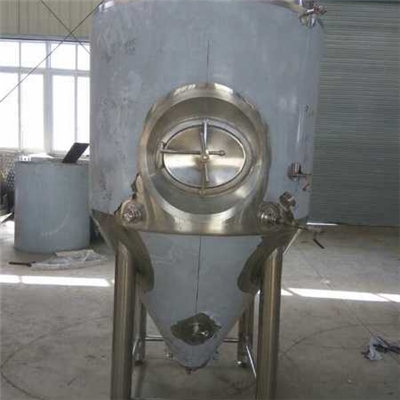
Traditional beer is produced in a square or rectangular fermentation tank (or pond) with a volume of only 5-30m. The scale of beer production is small and the production cycle is long. Since the 1950s, due to the rapid development of the world economy, the scale of beer production has greatly increased. Traditional fermentation equipment can not meet the needs of production, and large-capacity fermentation equipment has been paid attention to. The so-called large capacity fermentation tank refers to the volume of fermentation tank compared with traditional fermentation equipment. Large-capacity fermentation tanks include cylindrical conical fermentation tanks, Asahi tanks, general tanks and spherical tanks. Cylindrical conical fermentation tank is a universal fermentation tank in the world. The main body of the tank is cylindrical, the top of the tank is circular, the bottom is conical, with a considerable height (height greater than diameter). The tank body is equipped with cooling and heat preservation device, which is a fully closed fermentation tank. The cylindrical conical fermenter is suitable for both the bottom fermentation and the top fermentation, and the processing is very convenient. The vertical cylindrical conical fermenter invented by German brewers has been gradually popularized and used worldwide through continuous improvement and development due to its many advantages. Since the mid-1970s, outdoor cylindrical conical bottom fermentation tank (conical bottom fermentation method) has been adopted in China. At present, almost all beer production in China adopts this fermentation method.
1. Characteristics of Conical Tank Fermentation
(1) The conical bottom is convenient for discharging yeast at any time during the production process, and the condensed yeast is required.
(2) The tank itself has a cooling device to facilitate the control of fermentation temperature. The production is easy to control, the fermentation period is shortened, the chance of infection is less, and the quality of beer is stable.
(3) The outside of the tank is equipped with a thermal insulation device, which can place the tank outside, reduce construction investment, save space and facilitate expansion.
(4) Closed tank is used to facilitate CO2 washing and CO2 recovery, and fermentation can also be carried out under certain pressure. It can be used as fermentation tank or liquor storage tank. It can also combine fermentation and liquor storage. It is called one-pot fermentation method.
(5) The CO2 gradient (i.e. density gradient) of fermentation broth in the tank is caused by the liquid height. The natural convection of fermentation broth can be achieved by cooling control, and the higher the tank, the stronger the convection. Because of strong convection, yeast fermentation ability is improved, fermentation speed is accelerated and fermentation cycle is shortened.
(6) Fermentation tank can be controlled by instrument or computer, which is easy to operate and manage.
(7) The conical tank is suitable for both the following fermentation and the above fermentation.
(8) CIP automatic cleaning device can be used for easy cleaning.
(9) The conical tank is easy to process (can be processed on site), and has strong practicability.
(10) The capacity of the equipment can be adjusted flexibly according to the needs of production. The capacity can vary from 20 to 600 m, up to 1500 m.
1. Characteristics of Conical Tank Fermentation
(1) The conical bottom is convenient for discharging yeast at any time during the production process, and the condensed yeast is required.
(2) The tank itself has a cooling device to facilitate the control of fermentation temperature. The production is easy to control, the fermentation period is shortened, the chance of infection is less, and the quality of beer is stable.
(3) The outside of the tank is equipped with a thermal insulation device, which can place the tank outside, reduce construction investment, save space and facilitate expansion.
(4) Closed tank is used to facilitate CO2 washing and CO2 recovery, and fermentation can also be carried out under certain pressure. It can be used as fermentation tank or liquor storage tank. It can also combine fermentation and liquor storage. It is called one-pot fermentation method.
(5) The CO2 gradient (i.e. density gradient) of fermentation broth in the tank is caused by the liquid height. The natural convection of fermentation broth can be achieved by cooling control, and the higher the tank, the stronger the convection. Because of strong convection, yeast fermentation ability is improved, fermentation speed is accelerated and fermentation cycle is shortened.
(6) Fermentation tank can be controlled by instrument or computer, which is easy to operate and manage.
(7) The conical tank is suitable for both the following fermentation and the above fermentation.
(8) CIP automatic cleaning device can be used for easy cleaning.
(9) The conical tank is easy to process (can be processed on site), and has strong practicability.
(10) The capacity of the equipment can be adjusted flexibly according to the needs of production. The capacity can vary from 20 to 600 m, up to 1500 m.
2. Working Principle and Tank Structure of Conical Tank
(1) Working Principle of Conical Fermentation Tank
The reason for the short fermentation period and fast fermentation speed of conical tank fermentation is the hydrodynamic characteristics of fermentation broth in conical tank and the result of modern beer fermentation technology.
After inoculating yeast, the cell density of yeast at the bottom of the tank increases due to the coagulation of yeast, which leads to the acceleration of fermentation speed and the increase of carbon dioxide produced during fermentation. At the same time, the static pressure produced by the height of the liquid column of the fermentation broth also makes the carbon dioxide content change gradiently with the change of the liquid layer (see Table 4-3-1), so the density of fermentation broth in the tank also presents gradient. In addition, the temperature of each stage of fermentation can be controlled artificially because of the cooling device outside the conical tank. Under the motive forces of static pressure difference, density difference of fermentation broth, release of carbon dioxide and temperature difference (1-2 C) produced by cooling the upper part of the tank, the fermentation broth in the tank produces strong natural convection, enhances the contact between yeast and fermentation broth, promotes yeast metabolism, speeds up beer fermentation greatly, and shortens beer fermentation cycle significantly. In addition, the increase of inoculation temperature, main fermentation temperature of beer, diacetyl reduction temperature and yeast inoculation volume also helped to speed up yeast fermentation, so that the fermentation could proceed quickly.
(2) Basic Structure of Conical Fermentation Tank
The top part of the tank
The top of the tank is a circular arch structure. The central opening is used for placing large-diameter detachable flanges to install CO2 and CIP pipes and their connectors. The top of the tank is also equipped with anti-vacuum valves, over-pressure valves and pressure sensors. The inside of the tank is equipped with washing devices, as well as platforms and channels for the operation of the tank top.
(2) Tank body part
The tank body is a cylinder, which is the main part of the tank. The height of the fermenter depends on the diameter and height of the cylinder. Because of its large diameter and low pressure resistance, the diameter of conical tank is not more than 6m. The processing of the tank is easier than that of the top. The outside of the tank is used to install cooling device and insulation layer, and the temperature and pressure measuring elements are installed in a certain position. The cooling layer of the tank body has various forms, such as coil, Miller pull, jacket, and is divided into 2-3 sections. The cooling layer is connected with the cooling medium inlet pipe by the pipe lead-out. The cooling layer is coated with polyurethane foam plastic and other insulation materials. The insulation layer is coated with an aluminum alloy or stainless steel plate, and the color steel plate is also used as the protective layer.
(3) The bottom part of the cone
The angle between the bottom of cone is generally 60-ordm; ~80-ordm;, and 90-ordm; ~110-ordm;, but most of them are used in large capacity fermenters. The height of conical bottom of fermentation tank is related to the angle, the smaller the angle is, the higher the conical bottom is. The cone bottom height of a general tank accounts for about 1/4 of the total height, and should not exceed 1/3. The outer wall of the cone bottom should be provided with a cooling layer to cool the yeast deposited at the cone bottom. The cone bottom should also be equipped with pipes, valves, mirrors, temperature and pressure sensors.
In addition, the ratio of diameter to height of the tank is usually 1:2-1:4, and the total height should not exceed 16m in order to avoid strong convection and affect the sedimentation of yeast and coagulant. Can-making materials can be made of stainless steel or carbon steel. If carbon steel is used, the inner wall of the tank must be coated with non-toxic paint which has no effect on beer taste. The working pressure of fermentation tank can be determined according to the working characteristics of the tank. The working pressure of general fermentation tank is controlled at 0.2-0.3 MPa. The inner wall of the tank must be smooth and smooth. The inner wall of the stainless steel tank should be polished. The coating of the inner wall of the carbon steel tank should be uniform, without concave and convex surfaces and without granular bulges.
(3) Determination of the Main Size of Conical Fermentation Tank
The ratio of diameter to height is 1:1-4. Generally, the larger the diameter-height ratio, the stronger the natural convection during fermentation, and the faster the yeast fermentation speed. However, yeast is not easy to settle and beer clarification is difficult. The ratio of diameter to the total height of wort level should be 1:2, and the ratio of diameter to the height of columnar wort should be 1:1-1.5.
(2) The bigger the tank capacity is, the longer the full tank time of wort is, the more times of fermentation multiplication and the longer the fermentation time are, the more diacetyl precursors are formed, the more diacetyl is produced and the longer the reduction time is. In addition, the non-production time of liquor production, cleaning and wort re-entry will be prolonged, and the peak value of cold peak period will be high, resulting in cold supply tension. Due to the release of carbon dioxide and the generation of foam, the effective volume of the tank is generally about 80% of the total volume of the tank.
(3) The cone angle is generally between 60 ~90 and 60 ~75 (60 for stainless steel tanks and 75 for steel tanks with coatings), in order to facilitate the sedimentation and separation of yeast.
(4) Indirect cooling is often used for cooling jacket and conical fermenter with cooling area. In China, semi-circular pipe, channel steel, arc pipe jacket or Miller plate jacket are usually cooled by liquid secondary refrigerant at low temperature and low pressure (-3 C, 0.03MPa). In foreign countries, heat exchanger type (explosive forming) one-time refrigerant is used for direct evaporative cooling. The pressure of one-off cold enzymes (e.g. liquid ammonia evaporation temperature is - 3 ~4 C) after evaporation is 1.0 MPa~1.2 MPa, which requires high pressure resistance of jackets. Since the freezing point temperature of beer is generally -2.0 ~2.7 C, in order to prevent local freezing of beer in the tank, the refrigerant temperature should be around -3 C. In China, 20%-30% alcohol aqueous solution or 20% propylene glycol aqueous solution are often used as refrigerants.
According to the different capacity of the tank, two-stage or three-stage cooling can be used. The cooling area depends on the material of the tank. The stainless steel material is generally 0.35-0.4m/m fermentation broth, and the carbon steel tank is 0.5-0.62m/m fermentation broth. The cooling area of cone bottom should not be too large to prevent beer from freezing during storage.
The insulation layer and protective layer materials require small thermal conductivity, low volume and mass, less water absorption, non-flammable and other characteristics. The commonly used insulation materials are polyamide resin, self-extinguishing polystyrene plastic <https://baike.baidu.com/item/%E8%81%9A%E8%8B%AF%E4%B9%99%E7%83%AF%E5%A1%91%E6%96%99>, polyurethane, expanded perlite powder and slag wool. The thickness of insulation layer is generally 150-200 mm. Aluminum alloy plate, tinplate or stainless steel plate with thickness of 0.7-1.5mm are usually used as outer protective layer. Corrugated plate is more popular recently.
_Pressure-resistant fermentation of the tank produces a certain amount of carbon dioxide to form the tank top pressure (tank pressure), which should be equipped with carbon dioxide regulating valve and safety valve on the tank top. When carbon dioxide is discharged, liquor is discharged too fast, and carbon dioxide dissolves when the fermenter is washed, negative pressure will appear in the tank, so vacuum valves must be installed. Carbon dioxide or compressed air back pressure should be used before drinking to avoid the negative pressure in the tank, resulting in the "flat tank" of fermentation tank.
3. Fermentation Technology in Conical Tank
(1) Combination of Conical Tank Fermentation
There are several combinations of conical tank fermentation processes as follows:
(1) Fermentation-storage mode, which requires different requirements of two tanks and has different pressure resistance, is of little significance to modern brewing.
(2) Fermentation-post-treatment is one tank for fermentation and the other tank for Post-ripening treatment. For the fermenter, the fermentable ingredients are completed at one time, and the fermentable ingredients are basically not retained. All the CO2 produced by fermentation is recovered and stored for reserve, and then transferred to the post-treatment tank for Post-ripening treatment. The fermentation broth was centrifuged to remove yeast and condensate, then cooled to the storage temperature by thin plate heat exchanger, and then filtered after 1 to 2 days of low temperature storage.
(3) Fermentation-post-adjustment means that the former fermentation tank is similar to one-pot method for fermentation and liquor storage. Fermentable components are fermented, CO2 is recovered, yeast is recovered, and CO2 is washed. After proper low temperature storage, color, stability, CO2 content and other indicators are adjusted in the latter fermentation tank, and then filtering operation can be started after appropriate stability.
(2) Determination of main technological parameters of fermentation
(1) Fermentation cycle
It is determined by product type, quality requirement, yeast performance, inoculation amount, fermentation temperature, season, etc. It usually lasts 12 to 24 days. Generally, the fermentation period of common beer in summer is shorter, the fermentation period of high quality beer is longer, and the fermentation period of off-season beer is prolonged appropriately.
(2) Yeast inoculation
Generally, it depends on yeast performance, algebra, aging, product type and so on. The inoculation amount was determined by the number of yeasts added. At the beginning of fermentation: 10-20 *10/ml; at the peak of fermentation: 6-7 *10/ml; after yeast discharging: 6-8 *10/ml; at about 0 C, when wine is stored: 1.5-3.5 *10/ml.
(3) Fermentation maximum temperature and diacetyl reduction temperature
When beer is fermented vigorously, the temperature is called the highest fermentation temperature. Generally, beer fermentation can be divided into three types: low-temperature fermentation, medium-temperature fermentation and high-temperature fermentation. Low-temperature fermentation: exuberant fermentation temperature is about 8 C; medium-temperature fermentation: exuberant fermentation temperature is 10-12 C; high-temperature fermentation: exuberant fermentation temperature is 15-18 C. The general fermentation temperature in China is 9-12 C. Diacetyl reduction temperature refers to the temperature at the Post-ripening stage (mainly eliminating diacetyl) of beer after vigorous fermentation. Generally, diacetyl reduction temperature is equal to or higher than fermentation temperature, which can ensure beer quality and shorten fermentation cycle. With the increase of fermentation temperature, the fermentation period is shortened, but the increase of metabolic by-products will affect beer flavor and be easy to be infected with bacteria; with the increase of diacetyl reduction temperature, the Post-ripening time of beer will be shortened, but easy to be infected with bacteria is not conducive to yeast precipitation and beer clarification. Low temperature prolonged the fermentation period.
4. Tank pressure
According to the product type, wort concentration, fermentation temperature and yeast species, etc. In general, the maximum tank pressure is controlled from 0.07 MPa to 0.08MPa during fermentation. Generally, the highest tank pressure is the highest fermentation temperature divided by 100 (MPa). Pressure fermentation can inhibit yeast growth, reduce excessive metabolic by-products caused by temperature rise, prevent excessive production of higher alcohols and esters, and facilitate the reduction of diacetyl, and ensure the content of carbon dioxide in wine. The relationship between CO2 content in beer and canning pressure and temperature is as follows:
CO2(%, m/m) = 0.298+0.04p-0.008t
Among them, p - tank pressure (pressure gauge reading) (MPa)
T -- Beer Temperature (?)
Full tank time
The time required from the first batch of wort to the last batch of wort is called full pot time. Full pot time is long, yeast multiplication is large, metabolic by-product alpha-acetolactate is more, diacetyl peak value is high, generally in 12-24 hours, preferably within 20 hours.
Fermentability
It can be divided into low fermentation degree, medium fermentation degree, high fermentation degree and super high fermentation degree. The fermentation degree of light beer is divided into: low fermentation degree beer, its true fermentation degree is 48%-56%; medium fermentation degree beer, its true fermentation degree is 59%-63%; high fermentation degree beer, its true fermentation degree is more than 65%, ultra-high fermentation degree beer (dry beer) its true fermentation degree is more than 75%. At present, light beer with high fermentation degree is popular in China.
(4) Technical requirements of conical fermenter
(1) The quality of raw materials and saccharification effect should be controlled effectively, and the wort composition should be uniform in each batch. If the wort composition of each batch is too different, it will affect the reproduction and fermentation of yeast. For example, 10-ordm; P wort composition requirements are: concentration (m/m) 10 + 0.2, chroma (EBC unit) 5.0 - 8.0, pH 5.4 + 0.2, and alpha-amino nitrogen (mg/L) 140 - 180.
(2) The capacity of large cans should be in accordance with the amount of cold wort saccharified each time and the number of saccharification per day. It is required to fill a cans within 16 hours, not more than 24 hours at most. The hot coagulants should be removed as far as possible from the cold wort in the cans. It is better to separate the condensates as possible.
(3) Temperature control of cold wort should consider the time interval and the number of full cans. If the interval is long and many times, we can consider increasing the temperature of wort batches by batches. We can also consider that the first batch or two batches do not add yeast, and then several batches will add yeast in a certain proportion, adding proportion from small to large, but we should pay attention to avoiding the infection of wort. There are also ways to add yeast to the first batches of wort and no yeast to the last batch of wort.
(4) The control of dissolved oxygen in cold wort can be determined by yeast addition and yeast reproduction. It is generally required that each batch of cold wort should be oxygenated as required, and the dissolved oxygen in mixed cold wort should not be less than 8 mg/L.
Controlling the fermentation temperature should keep relatively stable and avoid high and low. It is better to adopt automatic control in temperature control.
_Carbon dioxide recovery should be carried out as far as possible in order to facilitate the washing of CO2, the replenishment of CO2 in liquor and the back pressure of CO2.
_Fermentation tank should be made of stainless steel for cleaning and sterilization. When making fermentation tank with carbon steel, the coating layer should be uniform and firm, and the surface should not be uneven, and the coating should not fall off during use. Fermentation tank should be equipped with high pressure spraying device, spraying pressure should be controlled at 0.39-0.49 MPa or higher.
(5) Operation steps (one-pot fermentation)
(1) Fermentation tank yeast, which has been cultured for 0 generations or has normal hypoglycemic fermentation in production, has fast diacetyl reduction and qualified microbial indicators, is selected as seed for inoculation. The latter can be crossbred by tank-tank method. The yeast count was (1.2-1.5)*10/ml after full tank inoculation.
(2) Under normal conditions, the full tank time should not exceed 24 hours, and the enlargement can be based on the enlightenment. Condensate is discharged every other day after full tank, three times in total.
(3) The main fermentation temperature is 10 (?) C, the common wine is 10 (?) 0.5 (?) C, the quality wine is 9 (?) 0.5 (?) C, and the peak season can be increased by 0.5 (?) C. When the apparent sugar content is reduced to 3.8%-4.2%, the tank can be sealed and pressurized. The pressure of fermentation tank is controlled from 0.10 to 0.15 MPa.
(4) After the main fermentation of diacetyl reduction, deacetyl reduction was carried out by turning off the refrigerant and heating up to 12 C. When the content of diacetyl drops below 0.10 mg/L, the temperature begins to decrease.
_After the reduction of diacetyl, the temperature was lowered from 12 to 5 within 24 hours, and the yeast was recovered for one day. The yeast can also be recovered during the fermentation at 12 C to ensure more highly active yeasts. In peak season or when yeast is not enough, yeast can be recovered directly after main fermentation.
_After yeast was recovered from wine storage, the conical tank continued to cool down, and the temperature was reduced to - 1 ~1.5 C within 24 hours, and the wine was stored at this temperature. Storage time: 7 days in off season and 3 days in peak season.
4. Recovery of yeast
The recovery method of yeast by conical tank fermentation is different from that of traditional fermentation. The main differences are as follows: the recovery time is uncertain, yeast can be discharged at any time after beer cooling to 6-7 degrees C, while traditional fermentation can only be carried out after fermentation; the recovery temperature is not fixed, it can be carried out at 6-7 degrees C, or at 3-4 degrees C or 0-1 degrees C; the number of recovery is not fixed, and the cone-shaped fermentation can be carried out at any time. Canned yeast can be recovered several times, mainly according to actual needs; different ways of recovery generally use yeast recovery pump and metering device, pressure and oxygen filling device, while equipped with yeast cans and large volume, can accommodate several cans of yeast recovery (the same or modern number); different storage methods, conical cans generally do not carry out yeast washing, storage temperature. The degree can be adjusted and the storage condition is good.
Generally speaking, yeast should be recovered in time when the end temperature of fermentation falls below 6-7 C. If the yeast is not recovered in time, the yeast at the cone bottom will soon appear autolysis. The cone bottom valve before yeast recovery should be sterilized with 75% (v/v) alcohol solution cotton ball, and the pipeline for yeast recovery or addition should be washed regularly for 20 minutes with 85 ~C NaOH (commonly known as pyroalkali) solution; the pipeline should be washed with 85 ~C hot water for 30 minutes and 0.25% disinfectant for 10 minutes before each use; the pipeline should be washed with clean water for 5 minutes before being sterilized with 85 ~C hot water for 20 minutes.
The more algebras yeasts use, the more anaerobic bacteria pollution will generally increase. It is better not to use more than four generations of yeast algebras. The yeast contaminated by anaerobic bacteria should not be recycled. It is better to do sterilization treatment before discharging.
When yeast is recovered, attention should be paid to slow recovery to prevent yeast cells from rupturing due to sudden decrease of pressure, and proper pressure preparation is preferred; upper and lower layers of yeast should be removed and middle layers of strong yeast should be recovered; after yeast recovery, storage temperature should be 2-4 C, and storage time should not exceed 3 days.
After yeast sludge recovery, it should be diluted with 0.5-2.0 C sterile water 2-3 times in time, filtered by 80-100 mesh yeast sieve to remove impurities, and washed 2-2.5 times a day.
If the recovered yeast mud contaminated fungi can be acid washed: edible phosphoric acid, diluted to 5% (m/m) with sterile water, added to the recovered yeast mud, the pH is 2.2-2.5, stirred uniformly, and placed for more than 3 hours, then the upper acid water can be poured into use. After pickling, more than 99% of bacteria can be killed.
Yeast usage algebra: It has been found that under the same conditions, the fermentation period of the second generation of yeast is longer, but the ability of reducing sugar and diacetyl is better; the third generation of yeast is the best in fermentation period, reducing sugar and reducing diacetyl, and the yeast activity is the strongest; after the fourth generation of yeast, the fermentation period gradually prolongs, and the ability of reducing sugar and diacetyl of yeast gradually decreases. The quality of products will deteriorate.
If wort is rich in nutrients (a-amino nitrogen content is higher than 180 mg/L), the activity of yeast recovery is high, but when wort is deficient in nutrients, the activity of yeast recovery is very poor, which has a significant impact on the next round of fermentation and beer quality.
The yeast mortality rate was determined by 0.01% methylene blue staining when yeast sludge was recovered. If the mortality rate exceeded 10%, yeast mortality rate could not be used again. Generally, the yeast mortality rate should be less than 5%.
- Related information
Anhui Xiangpai Machinery Manufacturing Co., Ltd. Copyright Anhui ICP Prepared 16011478-2 Disclaimer