9 Contents Maintenance of Fermentation Tank after Use
2019/1/1
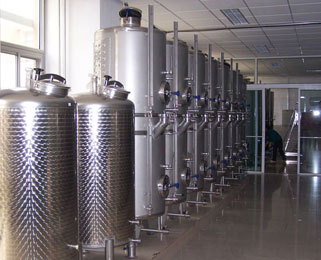
To produce a pot of fine wine, a high-quality brewing equipment is indispensable, of which the most important equipment is the fermentation tank, which can be said to be the key to brewing wine. So in order to give you a closer understanding of the product, today let's talk about the maintenance and maintenance of fermenter after use. 1. Work-holding agitator: Check and tighten the locking screw installed on the agitator shaft every time the cover is opened.

2. Position adjustment of magnet steel: The normal distance between magnet steel and tank bottom is 1-1.5 mm, and the small distance magnet steel bottom will reach a cabinet. Then the mixing shaft can not rotate or the sound dance of mixing shaft will accompany with larger phenomenon, and the interval is too large, which leads to the reduction of magnet steel between lower and lower. When the fermentation liquid is viscous, it can be stopped and accompanied by greater noise.
3. Bearing replacement: After 1-2 years of use, the noise of the bearing increases significantly, or the stirring shaft oscillates obviously to replace the bearing. The unloading end of bearing end cap, unloading screw shaft and bearing pressure cap, unloading material under bearing end cap, removing the bottom bearing of clamping spring, removing the stirring shaft, removing and replacing the bearing, and installing again.
4. Replacement of filter element: Because the air contains a lot of dust, after a period of time, the microporous filter will be gradually blocked, lack of this reason, air flow and air pressure drop increase, at the same time may lead to bacterial contamination, only need to change. When idling, the filter element should be removed from the air filter, and the condensed water in the filter should be drained side by side.
5. Maintenance of solenoid valves: the cooling of solenoid valves, the core of solenoid valves has failed, the sealing ring of the core has failed, and the damage of solenoid coils may lead to the failure of solenoid valves. Fault judgment: circulating pump is running normally, circulating line is normal, temperature drop is not only the biggest reason for the rise.
However, the solenoid valve leaks or the spool is stuck. Another reason may be the burnout of the electric heater. According to the water injection switch, the indicator light of the water injection switch is on, the end of the solenoid valve is not magnetic, there is no cooling water discharge, and the coil is broken. The indicator light of the water injection switch is not on and the F1 (real) fuse in the box burns out. Close solenoid valve, outlet cooling water leakage, valve core seal failure or debris plugging valve core.
6. Maintenance of ball valves, because the internal sealing ball valves are made of two hemispherical tetrafluoroethylene, after a long period of use, the leakage between the sealing valve core and the possible, unscrew the valves at both ends of the clamping sleeve joint nut, and then tighten the valve at the end of the cylindrical joint (in normal circumstances, the rotating stem should have some resistance).
7. Leakage of adapter joint: tighten the cover on the street.
8. Air hose: In order to prevent the hose and air flowmeter from accidental bursting, it is recommended to replace the hose every two years.
9. After fermentation and disinfection, it should be cleaned in time. During installation, the air distributor should be re-filled and the filling holes should be replaced in time, such as replacing the bottom valve and replacing the bottom valve washer.
Anhui Xiangpai Machinery Manufacturing Co., Ltd. Copyright Anhui ICP Prepared 16011478-2 Disclaimer